What Temperature to Set Your Air Conditioner in Australia
What temperature should you actually set your air conditioner to? It sounds straightforward, but there is plenty of conflicting advice around.
Some people swear by 18°C on a hot day, while others say anything below 25°C is wasting electricity. And most of us have done this at least once: walk into a hot house, grab the remote and immediately drop the air conditioner to 18°C because it feels like the fastest way to cool the room down.
The problem is that a very low thermostat setting does not necessarily get you comfortable any faster. What you are really doing is asking the system to keep cooling until the room reaches a much lower temperature than you may actually need.
For most Australian homes, a practical starting point is 25–27°C for cooling in summer and 18–20°C for heating in winter. These ranges are recommended in Australian Government energy guidance as a way to balance comfort with energy use.
These are not magic numbers, and every home will behave a little differently. Humidity, insulation, windows, direct sunlight, ceiling height, room size and the capacity of your air conditioner can all affect how a particular temperature feels.
Australian Government guidance estimates that each degree of extra heating in winter or cooling in summer can increase energy use by around 5–10%. Over several hours a day and across an entire season, even a small thermostat adjustment can make a noticeable difference to energy consumption.
Where you live matters too. A 25°C room during a dry Victorian summer can feel quite different from 25°C during humid weather in northern Australia. Temperature is only part of the comfort equation; humidity and air movement matter as well.
What Temperature Should You Set Your Air Conditioner to in Summer?
For summer cooling, start somewhere between 25°C and 27°C. This gives your air conditioner a sensible target without automatically asking it to cool the home more than necessary.
Imagine it is 35°C outside and you are comfortable once the room reaches 25°C. Dropping the remote to 20°C does not necessarily mean you will become comfortable sooner. It means you have asked the system to keep working towards a much colder final temperature.
Try starting at 25°C or 26°C, let the room cool and see how it feels before making another adjustment. If you are still too warm, lower the temperature gradually.
Use a fan as well
Fans do not lower the actual room temperature, but moving air across your skin can make you feel cooler. Your Home guidance notes that air movement of around 0.5 metres per second can create a cooling effect similar to a 3°C drop in temperature. In suitable conditions, this may allow you to keep the air conditioner set slightly higher while still feeling comfortable.
Close blinds before the heat gets in
It is usually easier to reduce heat gain than to cool a room after hours of direct sun. If windows receive strong afternoon sunlight, close blinds or curtains before the room becomes hot. When outdoor conditions become cooler later in the day, opening the home up can also help release accumulated heat where it is safe and practical to do so.
Do not cool rooms nobody is using
If you are cooling one living area, close doors to spare bedrooms, bathrooms or other unused spaces where practical. Reducing the area being conditioned can reduce the load on the system.
What Temperature Should You Set Your Air Conditioner to in Winter?
For winter heating, 18–20°C is a sensible starting point when using a reverse-cycle air conditioner. It can be tempting to come home to a cold house and turn the system straight up to 26°C or 28°C, but that is often unnecessary.
Set the system to Heat Mode, start around 19°C or 20°C, and give the room time to warm. If it still feels cold after the system has been running for a while, the thermostat may not be the real problem.
Poor insulation, draughts, high ceilings, large windows and an air conditioner that is not correctly sized for the space can all make a room harder to heat.
Keep the heat where you need it
If you are spending the evening in one living area, there is little benefit in heating every unused room. Close doors to areas you are not using where possible.
Check for obvious draughts
Look around external doors and windows for obvious gaps. If warm air is continually escaping, the system has to keep replacing that lost heat.
Direct warm air appropriately
For wall-mounted split systems, directing warm airflow towards the lower part of the room can help distribute heat because warm air naturally rises. Follow the manufacturer’s guidance for louvre and airflow settings on your particular system.
How Can I Make My Air Conditioner More Energy Efficient?
The thermostat and the efficiency of the air conditioner are only part of the story. Even an efficient system can cost more to run if conditioned air is continually escaping through gaps or heat is entering through poorly insulated parts of the home.
Draught-proof the home
Air leaking around doors, windows and other gaps means some of the air you have paid to heat or cool can escape outside. Australian Government guidance says sealing gaps and cracks can cut energy costs by up to 25% in some circumstances. Draught-proofing is a relatively simple improvement that can help a home hold a more stable indoor temperature.
Improve insulation
Good insulation slows heat transfer. In summer, it helps reduce heat entering the home; in winter, it helps keep warmth inside. Australian Government and Your Home guidance consistently identify insulation as an important part of improving thermal comfort and reducing heating and cooling demand.
Use appropriate shading
Curtains, blinds and external shading can reduce solar heat gain through windows, particularly on hot afternoons. Preventing heat from entering the room can reduce the amount of cooling the air conditioner needs to provide.
Keep filters clean
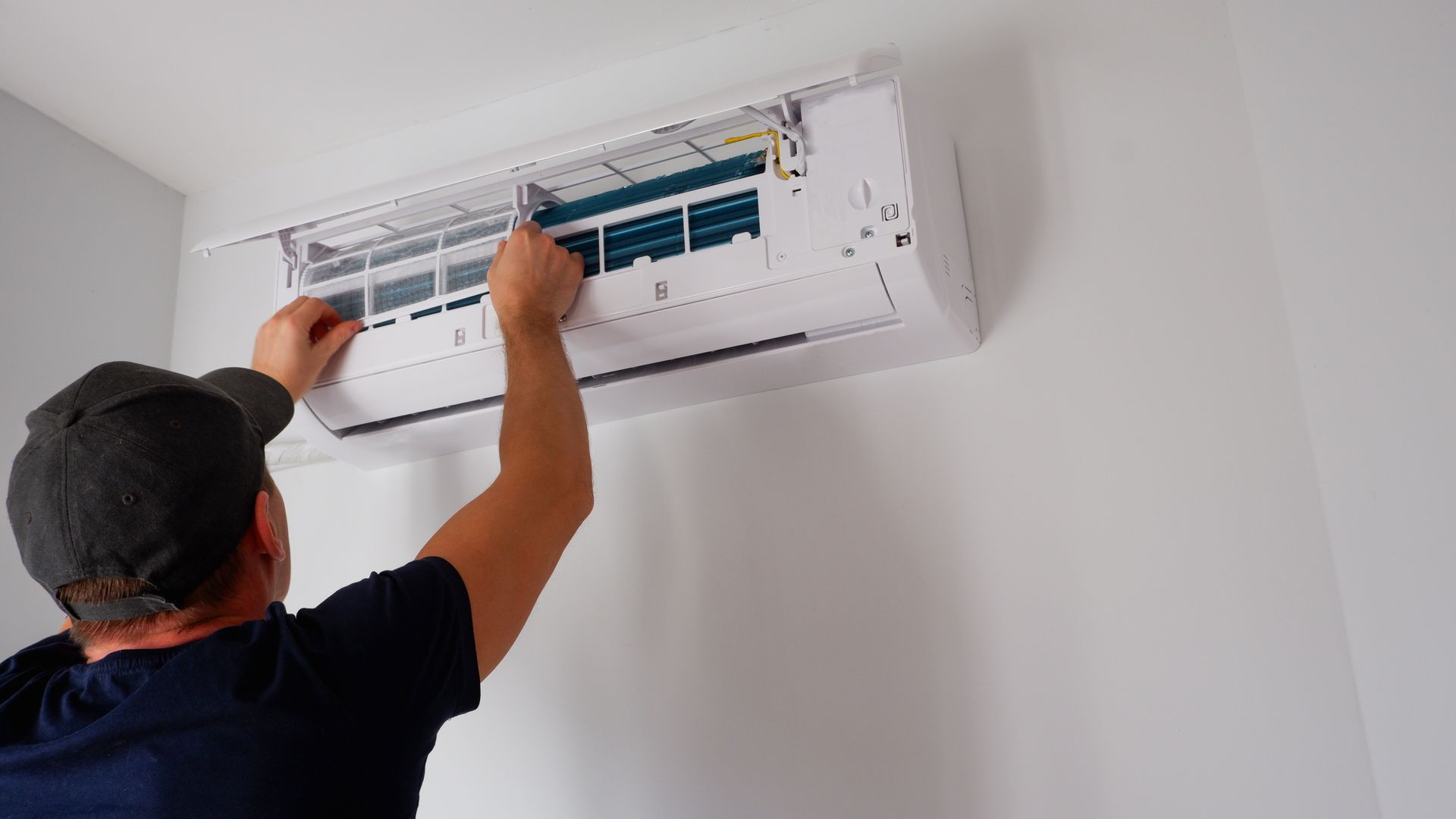
Dirty filters can restrict airflow and affect system performance. Clean or replace filters as recommended by the manufacturer, and follow the maintenance instructions for your particular model.
Consider inverter technology when replacing a system
Modern inverter air conditioners can vary compressor speed according to the amount of heating or cooling required. Rather than operating at one fixed output whenever the compressor runs, the system can adjust its output as conditions change. Actual energy savings depend on the equipment, the home, installation quality and how the system is used, so be cautious with blanket percentage-saving claims.
What Temperature Should I Set My Split System?
If you have a reverse-cycle split system, there is no need to overcomplicate the thermostat. As a starting point, use Cool Mode at 25–27°C in summer and Heat Mode at 18–20°C in winter, then adjust according to how the room actually feels.
One thing that regularly causes confusion is the number displayed on the remote. If your split system is set to 20°C in Heat Mode, that does not mean the air coming out of the indoor unit is only 20°C. The number on the thermostat is the target room temperature the system is working towards. The same principle applies in summer.
Are Split Systems More Efficient Than Ducted Air Conditioning?
For individual rooms or selected areas, a split system can be an efficient option because it delivers conditioned air directly into the room rather than through a duct network. Ducted systems can experience additional energy use and losses associated with moving air through ducts, particularly if ductwork is poorly sealed or insulated.
That does not mean every split system will automatically cost less to operate than every ducted system. Actual performance depends on factors such as:
- equipment efficiency and star rating
- system size and capacity
- zoning and controls
- the number of rooms being conditioned
- insulation and house design
- installation quality
- how the system is used
Multi-split systems can allow individual indoor units to serve different rooms, giving you more control over which areas are conditioned. Zoned ducted systems can provide similar room or zone control, depending on their configuration.
Does Setting Your Air Conditioner to a Lower Temperature Cool the Room Faster?
Not necessarily. If the room is currently 30°C and you want it to reach 24°C, setting the thermostat to 16°C does not automatically mean the room will reach 24°C faster. What you have definitely changed is the final target: the system is now being asked to continue cooling towards 16°C rather than stopping around 24°C.
Modern inverter air conditioners can vary compressor speed depending on cooling demand, so exactly how a particular system responds will depend on its design and controls. The practical rule is simple: set the air conditioner to the temperature you actually want rather than automatically choosing the lowest number on the remote.
Air Conditioner Settings That Affect Comfort and Efficiency
Temperature gets most of the attention, but it is not the only setting that matters. Mode selection, airflow and basic maintenance can all affect how comfortable the room feels and how effectively the system operates.
Cool Mode
Use Cool Mode when you actually need to reduce the room temperature. During summer, 25–27°C is a sensible starting point. If the room still feels too warm after it has had time to cool, adjust the temperature gradually.
Dry Mode
Dry Mode is designed primarily to remove moisture from the air while providing some cooling. It can be useful on warm, humid days when the room feels muggy even though the temperature is not extreme. Do not assume Dry Mode will always use less electricity than Cool Mode, however. Different air conditioners manage Dry Mode differently, and actual energy use depends on the system and conditions. If the room is genuinely hot, Cool Mode will usually be the more appropriate setting.
Fan Mode and fan speed
Fan Mode circulates air in the room without actively heating or cooling it. When the system is heating or cooling, fan speed affects how quickly conditioned air moves around the space. On many systems, Auto fan speed is a practical default because the unit can adjust airflow according to its operating logic.
Keep your filters clean
Dirty or clogged filters can restrict airflow and affect performance. Australian Government guidance recommends following the manufacturer’s instructions for operation and maintenance. Check your manual for the correct cleaning or replacement schedule for your particular air conditioner.
Why Isn't My Air Conditioner Reaching the Set Temperature?
If you have set the air conditioner to 24°C but the room is still sitting at 28°C after running for some time, lowering the thermostat further may not solve the problem. Check the following first:
Check the filter
A dirty or clogged filter can restrict airflow through the indoor unit and affect performance.
Check doors and windows
An open door can increase the amount of space the air conditioner is trying to heat or cool. If you are conditioning one room or zone, make sure you are not unintentionally asking the system to deal with a much larger area.
Look at direct sunlight
Large windows exposed to strong afternoon sun can introduce a significant amount of heat into the room. Blinds, curtains and external shading can help reduce that load.
Check around the outdoor unit
The outdoor unit needs clear airflow. Make sure it is not obstructed by vegetation, leaves, stored items or other debris. Do not dismantle or work inside the unit yourself.
Consider whether the air conditioner is the right size
Air-conditioner sizing is not simply a matter of looking at floor area and choosing a unit. Climate, ceiling height, insulation, windows, orientation and room design can all influence the heating and cooling load.
If your air conditioner used to reach the set temperature without a problem but no longer does, pay attention to other symptoms. Unusual noises, icing, water leaks, poor airflow or a noticeable drop in performance are all good reasons to have the system checked. If the problem persists, arrange an inspection by a qualified technician rather than continuing to lower the thermostat.
Frequently Asked Questions
Is 26°C too hot for air conditioning?
No. For summer cooling, 26°C sits within the Australian Government’s recommended 25–27°C range. How comfortable it feels will also depend on humidity, air movement, clothing, sunlight and personal preference.
Does setting my air conditioner to 16°C cool the room faster?
Not necessarily. Think of 16°C as a target temperature, not a turbo button. Modern inverter air conditioners can vary output according to cooling demand, so exactly how quickly the room cools depends on the system and the conditions. A better approach is to set the thermostat to the temperature you actually want.
Is it cheaper to leave my air conditioner running all day?
Not as a general rule. Australian Government guidance recommends switching heating and air conditioning off when you leave the house or when it is not needed. Whether continuous operation makes sense in a particular situation will depend on the home, weather, equipment, electricity tariff and how long the property is unoccupied.
Does one or two degrees really make a difference to the electricity bill?
Yes, it can. Australian Government guidance estimates that each degree of extra heating in winter or cooling in summer can increase energy use by around 5–10%. Across an entire summer or winter, a few degrees can therefore make a meaningful difference.
Should a ducted system and split system be set to the same temperature?
You can use the same basic comfort ranges as a starting point, but setting both systems to 25°C does not mean they will consume the same amount of electricity. Equipment efficiency, duct losses, zoning, house design, system size and the number of rooms being conditioned all affect the result.
Does Dry Mode use less electricity than Cool Mode?
Sometimes, but not always. Dry Mode is mainly intended to reduce humidity rather than heavily cool a room. On a humid but not particularly hot day, it may provide enough comfort without intensive cooling. Electricity consumption varies between air conditioners and operating conditions, so it is not accurate to say Dry Mode will always use less energy than Cool Mode.
What is the best aircon temperature for sleeping?
There is no single thermostat setting that works for everyone. Choose a temperature that keeps the bedroom comfortable without making it unnecessarily cold. If your air conditioner has a Sleep Mode, check how it works on your particular model. Some systems gradually adjust temperature, fan speed or airflow during the night. A ceiling fan may also improve comfort and allow you to keep the air-conditioning temperature slightly higher.
Key Takeaway
For most Australian households, 25–27°C in summer and 18–20°C in winter are practical starting points for balancing comfort and energy use. Your ideal setting may vary depending on climate, humidity, the home, the system and personal comfort. Start within these ranges and adjust gradually rather than automatically choosing the highest or lowest thermostat setting.
Editorial Sources Used for Fact-Checking
The numerical recommendations and energy-efficiency statements in this draft were checked against current Australian Government and Your Home guidance, including: